

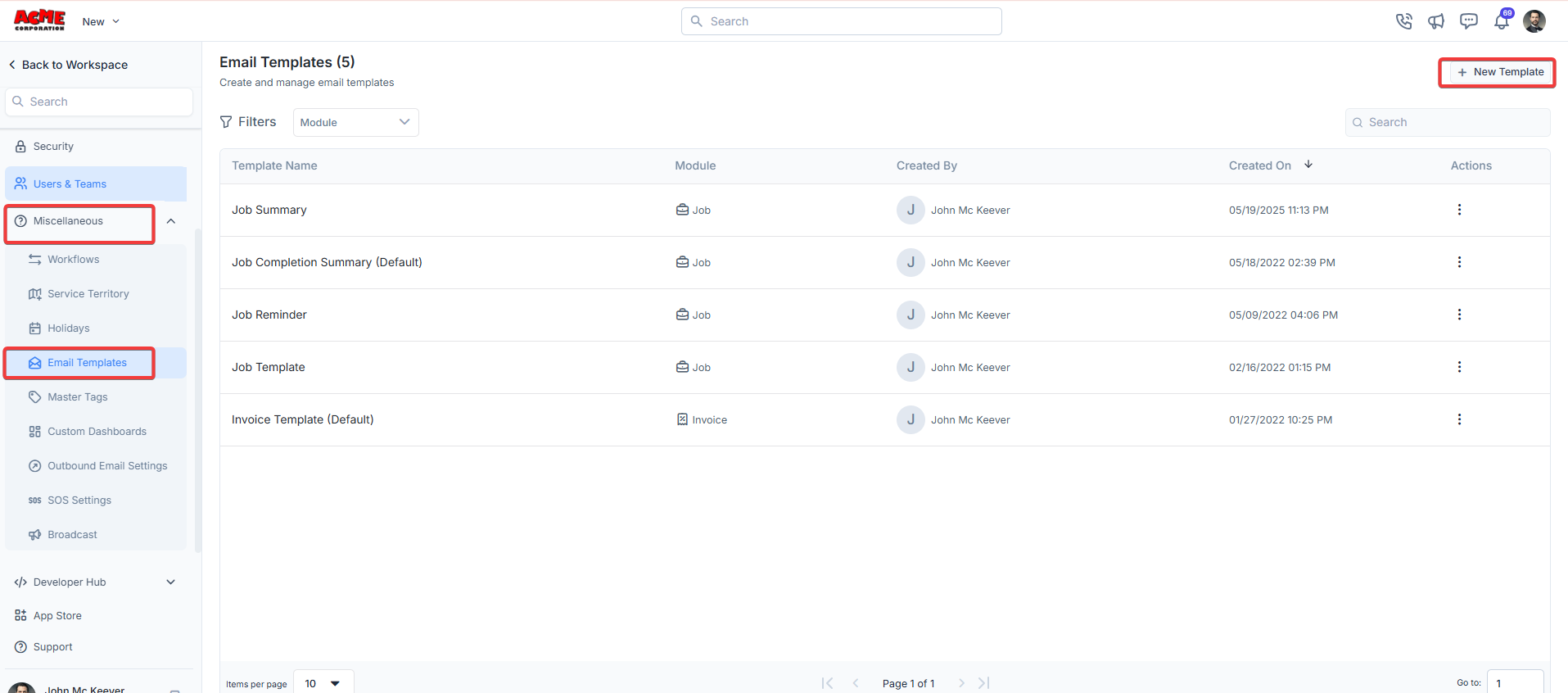
Navigation: Settings -> Miscellaneous -> Email Templates
- From the settings, select “Miscellaneous.” From the “Email Templates” section, choose “+ New Template.”
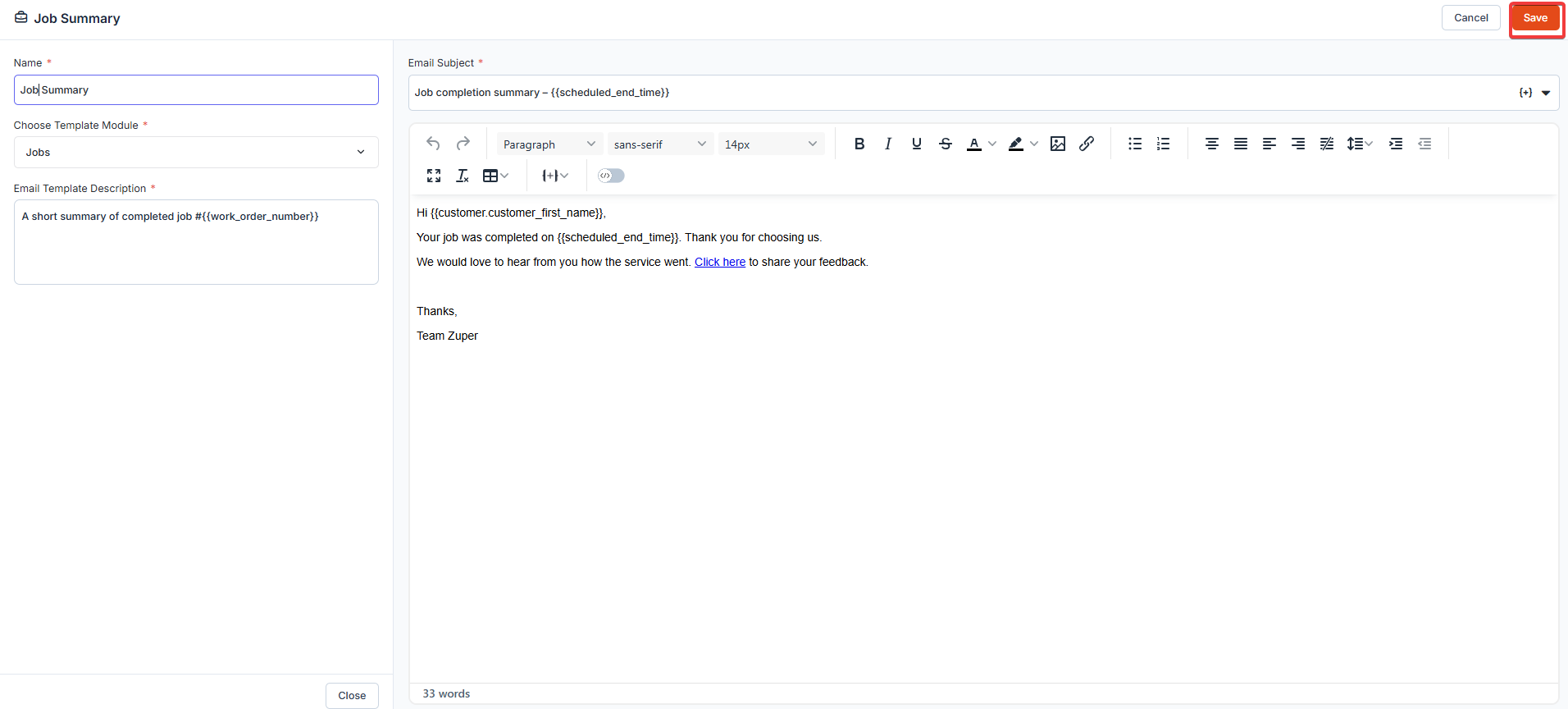
- Enter the following details:
- Name: Enter a unique name for your email template.
- Choose Template Module: Select the module this template applies to from the dropdown
- Email Template Description: Add a brief description of the template’s purpose, including any placeholders like [#work_order_number] that will be dynamically replaced when the email is sent.
- Email Subject: Enter the subject of the email.
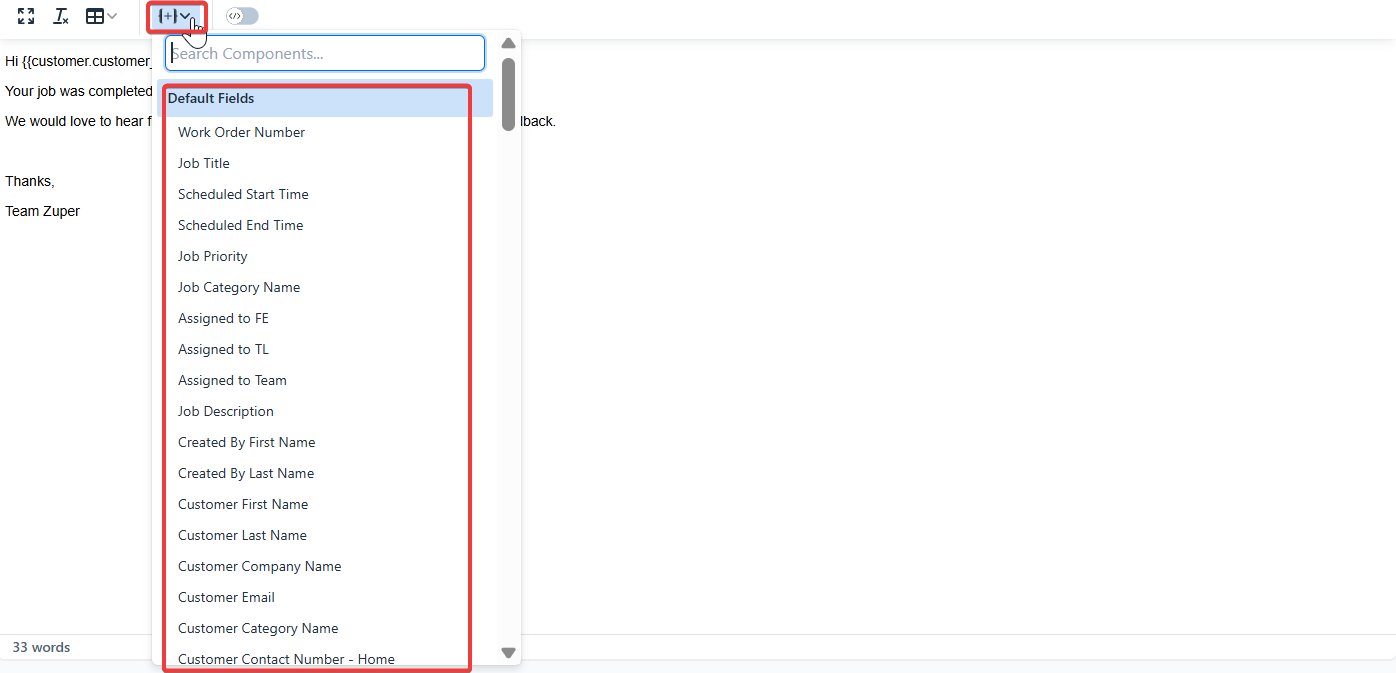
- Template body: Enter the template body. Use the available components.
Configure the payment receipt template
When a payment is recorded in Zuper, the system sends a receipt email to the customer. The content of that receipt — including the support contact link displayed in the receipt — is controlled entirely by the payment receipt email template. To configure the payment receipt template:- Go to Settings and select Miscellaneous.
- Select Email Templates.
- Locate the existing payment receipt template in the list and select the three-dot menu under the Actions column.
- Select Edit. The Email panel opens.
- Confirm Choose Template Module is set to Invoices.
- Update the Email Subject if needed. The default subject uses the
{{estimate_no}}placeholder to automatically include the receipt number. - In the Template body, update your support contact details. To add or change the support contact link, place your cursor in the relevant body area, enter the link text, and use the link icon in the toolbar to attach the URL or email address.
- Select Save.
If no payment receipt template exists yet, select + New Template, complete all mandatory fields, and select Invoices from the Choose Template Module dropdown. Select Save when done.
- Use placeholders thoughtfully to ensure the email content is relevant and personalized.
- Test the template by triggering a sample email to verify that all placeholders are replaced correctly.
- You can edit or delete templates later by clicking the three-dot menu under the Actions column in the Email Templates list.