

Overview
Once you record a payment against an invoice, Zuper locks it to protect your financial records. That protection creates one specific situation to plan for. For example, if a technician collects 80 instead of 80.50 due, the invoice remains in Partially Paid status. You then need to resolve that small mismatch. Until now, resolving it meant refunding the payment, canceling the invoice, and recreating it from scratch adding extra steps to your accounting records every time. The edit flow closes that gap. Admins can now edit a paid or partially paid invoice directly, without a refund or cancellation standing in the way. Think of it like adjusting a receipt after checkout: the payment already collected stays exactly where it is, while Zuper calculates what the customer still owes or what they overpaid once you save your changes. That recalculation works the same way across all invoice types, including standalone invoices and those generated from jobs, quotes, contracts, and projects.Navigation: Accounting → Invoices → Invoice Details → Edit invoice
Before you begin
This capability is admin-gated. The following conditions must be met before you can use it.- Setting: The Enable Edit Invoices setting must be turned on at the organization level (Allow editing paid and partially paid invoices). Only then does the edit flow become available to anyone, regardless of role.
- Role: You need the Admin role, or a custom role with the Edit Paid Invoices permission enabled. This permission controls the Edit invoice button on the Invoice Details page and on the Invoices listing page. To enable this permission, go to Settings, select Users & Teams, select the custom role, then enable Edit Paid Invoices under Payments.
- Invoice status: The invoice must already be in Paid or Partially Paid status.
Edit a paid or partially paid invoice
With the right permissions in place, here is how to reopen a locked invoice for editing.- Select the Accounting module from the left navigation menu, then select Invoices.
- Select the invoice you want to edit.
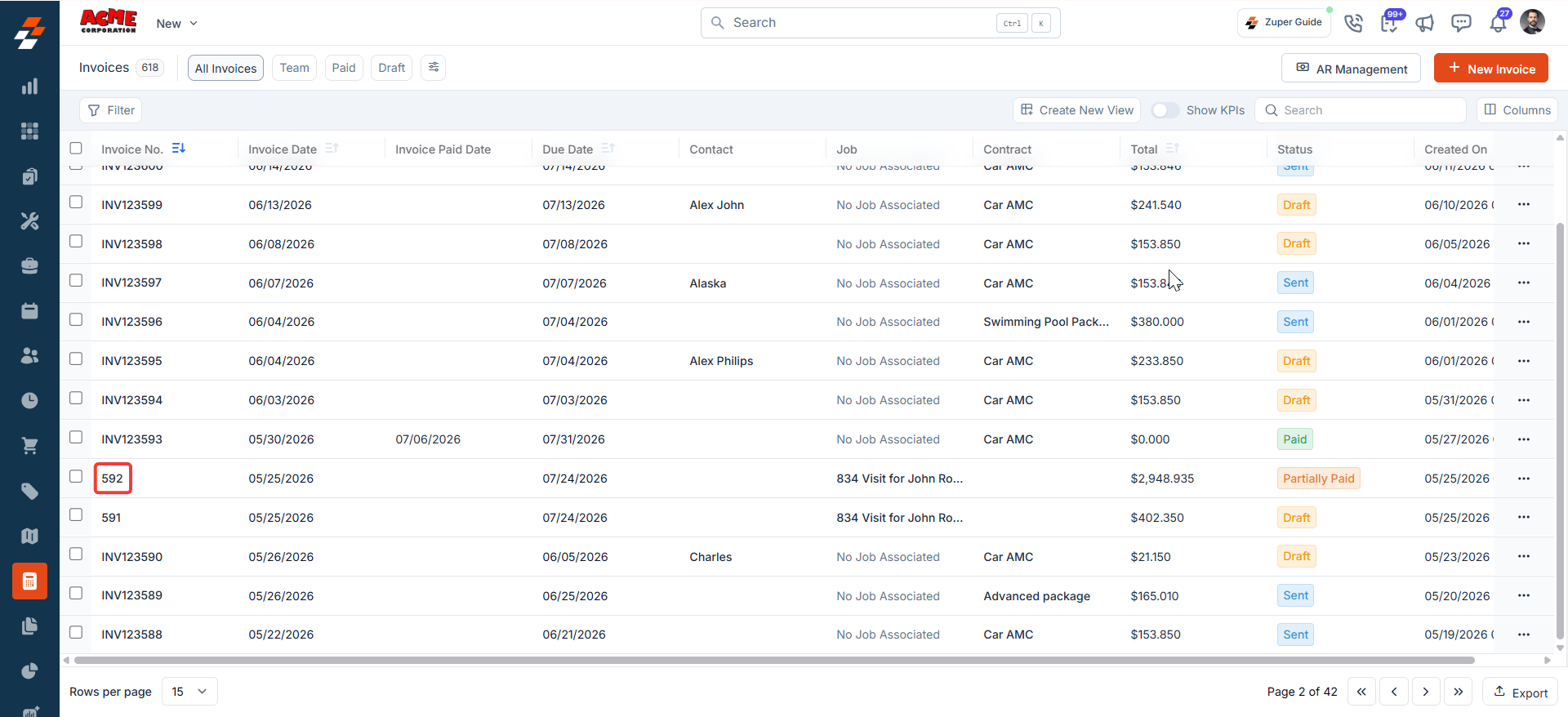
- The Invoice Details page opens. Select Edit invoice. The invoice enters edit mode.
Zuper does not save any changes until you select Save.
Make your changes
Once you are in edit mode, the invoice behaves much like a draft again.- Add, remove, or update line items as needed.
- Update tax and discount fields if the revised amount requires it.
- Review the running total at the top of the page as you go. It updates with every change, so you always know where the invoice stands before you commit.
- Select Save & Send to apply your changes.
Payments already recorded on the invoice stay read-only during edit mode. The edit flow is meant to correct the invoice, not the payment. To change a recorded payment amount, void or refund the payment instead. See Recording Payments or Issuing Refunds.
Edit mode does not offer a Save as Draft option, and you cannot set the invoice status to Sent while editing. Because the invoice already has a payment recorded against it, Zuper keeps it out of the draft and unsent states.
What happens after you save
Zuper compares the revised invoice total to the amount already paid, then walks you through one of three outcomes based on how the two numbers compare. New total matches the amount paid Zuper suggests marking the invoice as Paid. Select Confirm to apply this status. New total is higher than the amount paid The customer now owes more than they already paid. A previously Partially Paid invoice stays in that status, with Zuper updating the outstanding balance automatically. A previously Paid invoice moves to Partially Paid, since the payment on file no longer covers the full amount. Select Request Payment to collect the new Balance Due from the customer.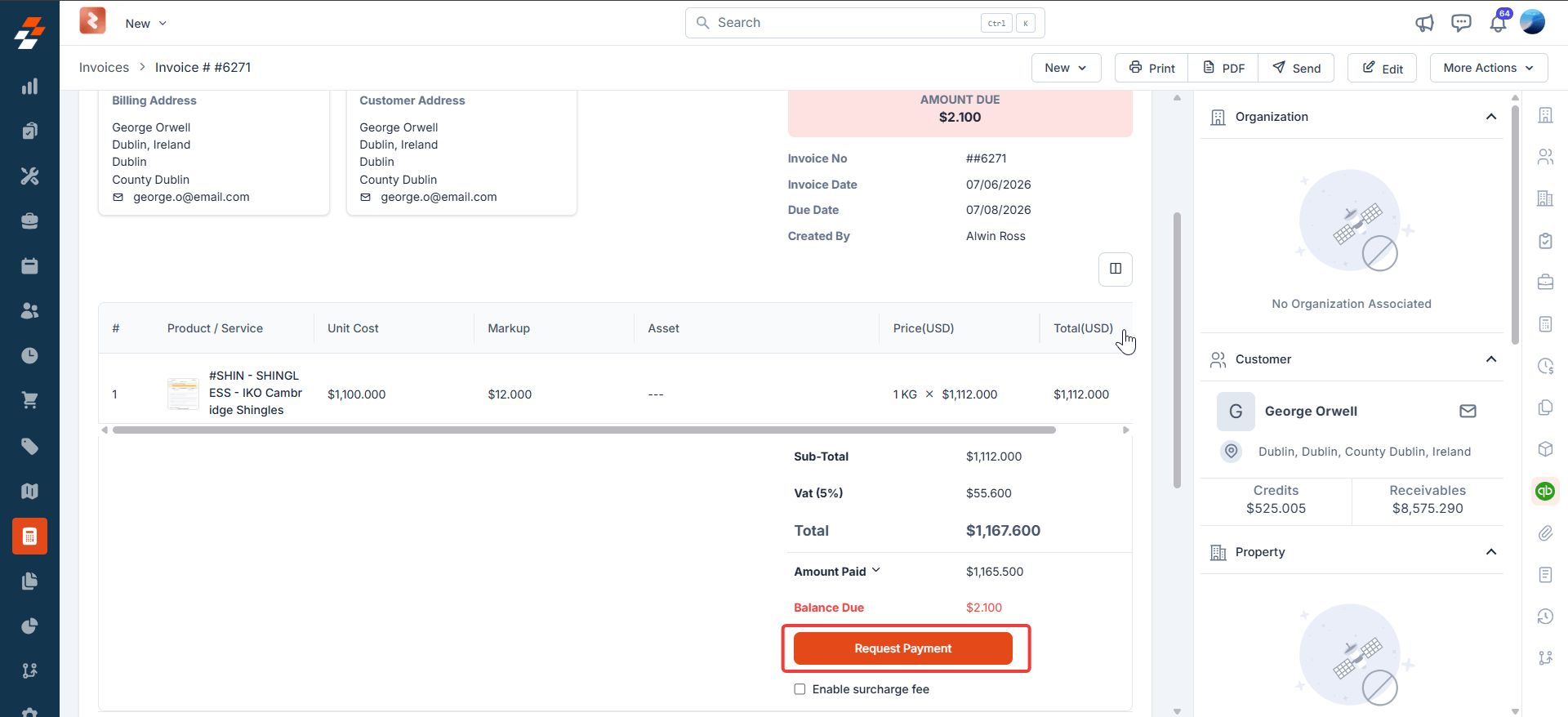
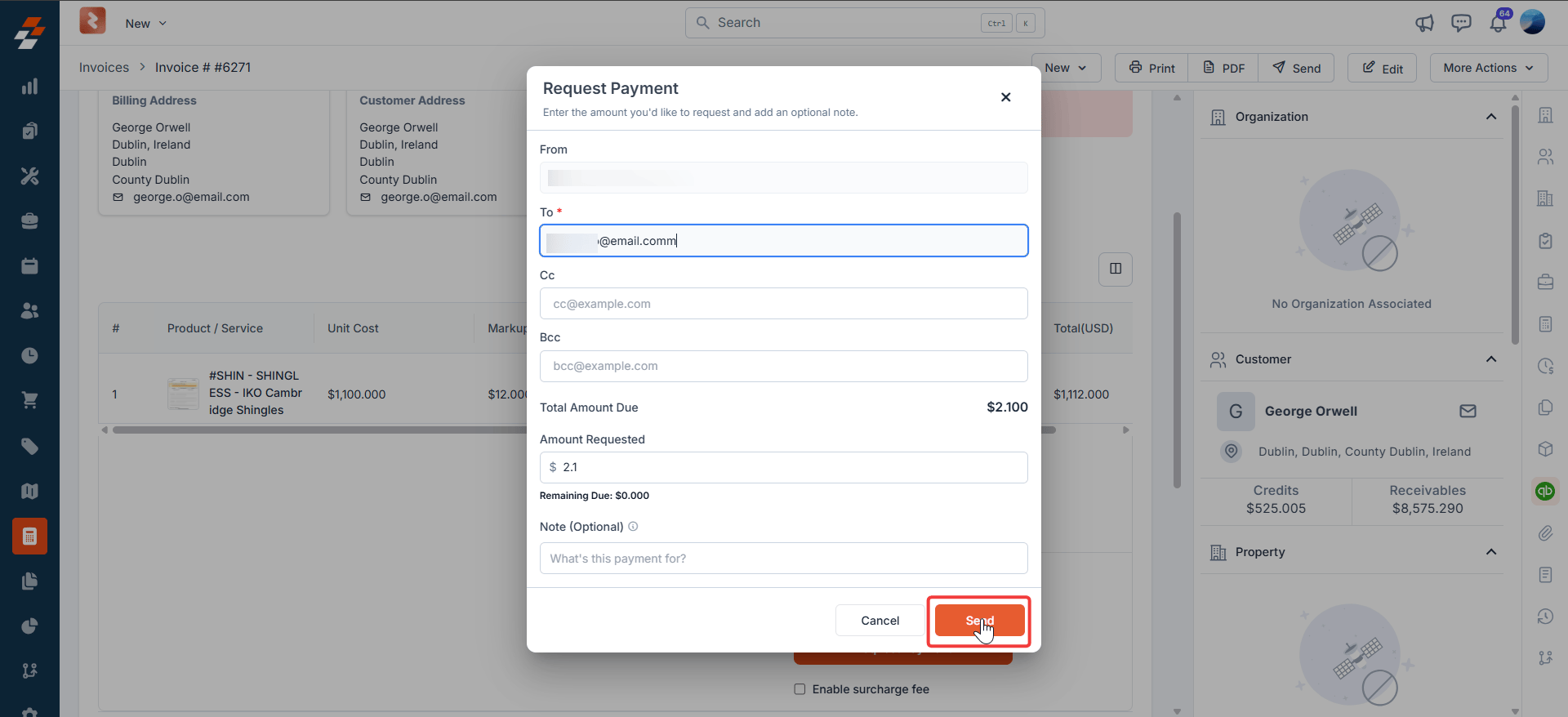
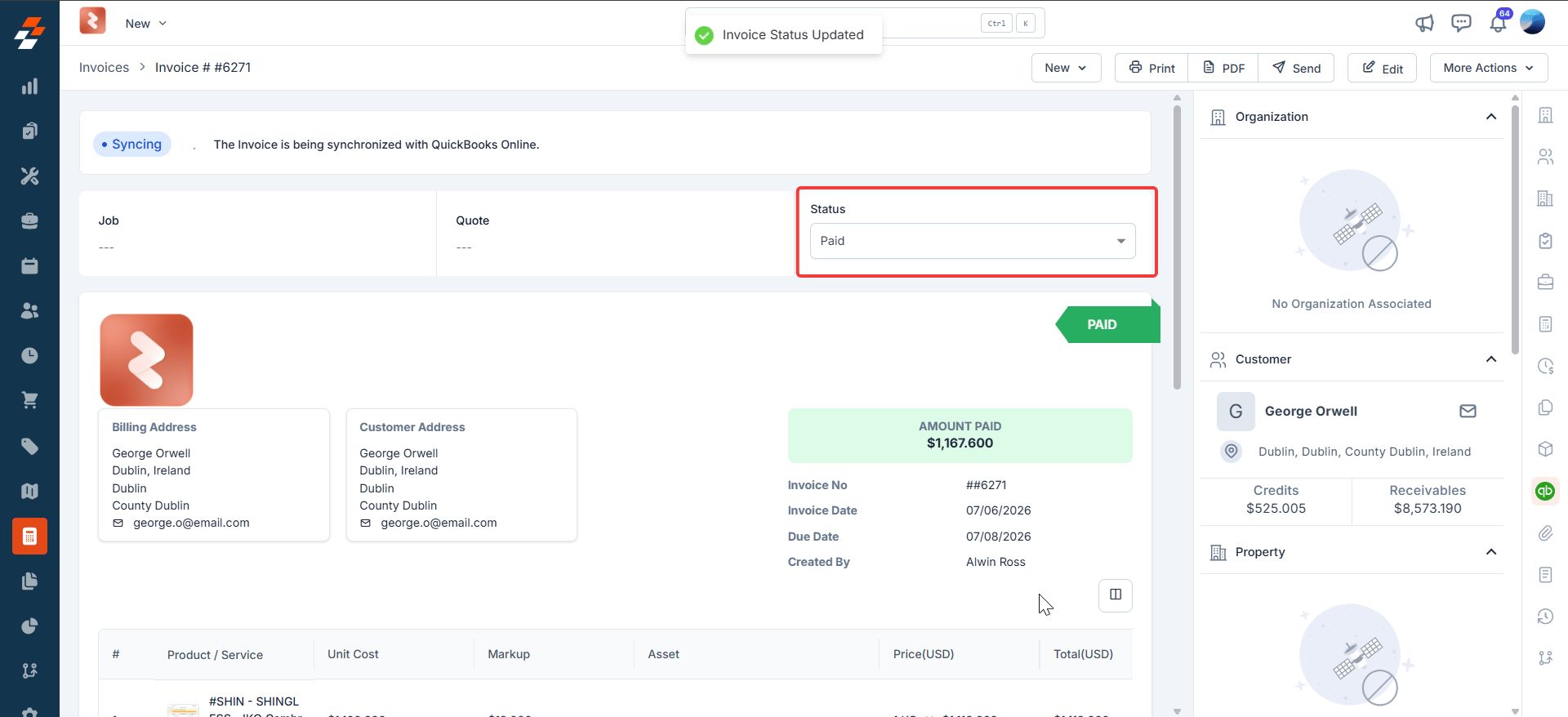
Zuper never changes invoice status on its own. Whatever the outcome, you confirm the change before it takes effect.