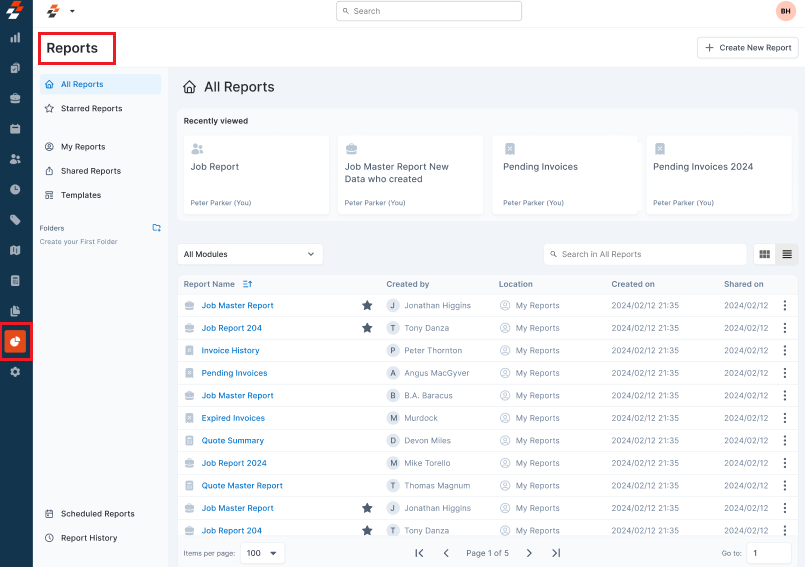
Imagine having all your business data at your fingertips, helping you track jobs, invoices, or quotes with ease. Zuper’s reporting tools make this a reality, guiding you through a simple process to access and create reports tailored to your needs.  Initially, Zuper provided a set of ready-to-use reports to help you quickly understand your business. These pre-built reports, like the Jobs Master Report, Invoice Summary Report, and Employee Utilization Report, covered a wide range of areas and were designed to give you instant insights without any setup. You can still access these reports by navigating to the sidebar and selecting the Legacy Reports section, where you will find a full list of these original reports ready to use.  To give you even more control, Zuper is introducing a more powerful way to create reports as the platform evolves. You can start by clicking the Reports module in the left navigation menu and selecting Reports (beta version). You’ll land on the Reports builder home page, a powerful tool that lets you create your own reports. This enables you to visualize any field’s information needed for insightful reports. Using this feature, you can transform raw data into actionable insights.   You can create Summary or Detailed Reports by selecting fields from key modules like Jobs, Invoices, Customers, Assets, teams, and so on. You can also explore pre-built report templates, which allow you to customize by modifying fields, applying filters, and organizing fields to suit your specific needs. Once your report is set up, you can schedule it to run automatically and deliver real-time information without any manual effort.  With Zuper’s reporting tools, you can easily monitor, spot trends, and make better decisions, all in just a few clicks.  Report1

Main benefits of Report Builder

With Zuper’s Report Builder, you’re not limited to standard templates. You can also design your own reports that suit your needs by: 
  • Choosing specific fields – You can select the exact field you need from different key modules. 
  • Applying advanced filters – You can narrow down your reports by applying filters and conditions. 
  • Grouping and summarizing – You can aggregate data for better insights.  
  • Exporting and sharing – You can download the reports or grant direct access to team members. 
  • Scheduling –  You can schedule reports to generate and deliver insights at your preferred frequency, whether daily, weekly, or monthly.

Legacy reports vs. Report Builder

Legacy reportsReport Builder
AvailabilityIncluded in all plansPaid add-on
Setup requiredNoneYes — you configure fields and filters
CustomizationNot customizableFully customizable
SchedulingNot availableAvailable
SharingNot availableAvailable
Best forQuick, standard insightsCustom, business-specific reporting

Modules for Reporting in Zuper

In Zuper, reports are built using data from key modules that represent essential aspects of your business operations. Selecting the right modules allows you to create customized, data-driven reports tailored to your needs. Available Modules:
  • Organization
  • Customer
  • Property
  • Users
  • Teams
  • Products
  • Assets
  • Jobs (Timelogs, Service Tasks)
  • Estimates
  • Invoices
  • Service Contracts
  • Timesheets
Report Builder lets you pull data from 12 modules. Each module gives you a specific set of fields you can add as columns, apply as filters, or group by when you build a report. Knowing what each module contains helps you choose the right one before you start — and avoids building a report only to find the data you need lives somewhere else.
Custom fields appear inside Report Builder for any module where your administrator has configured them. They are listed as Custom Fields in each module reference below. The fields available to you depend on your account configuration.
Organization vs. Property — what is the difference? An Organization report surfaces company-level data: who the client entity is, billing details, and contact information. A Property report surfaces location-level data: where service is delivered, the site address, and the associated contact.A single organization can have many properties. Use Organization reports for account management and billing. Use Property reports for dispatching, territory analysis, and site history.
What it covers: Company-level client records — businesses, multi-branch accounts, and corporate entities your team services.
FieldDescription
Organization NameThe company or business name
Organization CodeSystem-generated unique identifier
Primary EmailMain contact email for the organization
Primary PhoneMain contact phone number
Billing AddressThe organization’s billing address
WebsiteThe organization’s website URL
Tax NumberTax or VAT ID on file
NotesInternal notes attached to the organization
Created DateDate the organization record was created
Custom FieldsAny admin-configured custom fields for organizations
Use this report to: Audit your organization records, export a client list for CRM sync, or identify organizations with missing contact information.
What it covers: Physical service locations — homes, offices, warehouses, or any site where field work is performed. A property is always linked to a customer or organization.
FieldDescription
Property NameName or label for the location
Property CodeSystem-generated unique identifier
Service AddressFull address of the property
Associated CustomerCustomer linked to this property
Associated OrganizationOrganization linked to this property
Property TypeClassification — for example, Residential or Commercial
NotesInternal notes on the property
Created DateDate the property record was created
Custom FieldsAny admin-configured custom fields for properties
Use this report to: Export a list of all service locations, identify properties with no associated customer, or pull a list of sites of a specific type for scheduling or territory planning.
What it covers: Individual contact records — the people who receive services or communicate with your field team.
FieldDescription
Customer NameFirst and last name
Customer CodeSystem-generated unique identifier
EmailCustomer’s email address
PhoneCustomer’s phone number
AddressCustomer’s primary address
Associated OrganizationOrganization the customer belongs to, if any
Notification PreferencePreferred contact method
Created DateDate the customer record was created
Custom FieldsAny admin-configured custom fields for customers
Use this report to: Review contact completeness, segment customers by notification preference, or export a contact list for outreach.
What it covers: All work orders — scheduled, in progress, and completed. The Jobs module also exposes sub-module data for Timelogs and Service Tasks.
FieldDescription
Job TitleName of the job
Job NumberSystem-generated job reference
Job CategoryCategory or type assigned to the job
StatusCurrent job status
PriorityJob priority level
Scheduled DateWhen the job is scheduled
Due DateJob deadline
Assigned User(s)Technician or technicians assigned
TeamAssigned team
CustomerAssociated customer
OrganizationAssociated organization
PropertyAssociated service location
Service AddressWhere the work is performed
Job ValueTotal value of the job
Created DateDate the job was created
Completed DateDate the job was marked complete
Custom FieldsAny job-level custom fields
Timelogs sub-fields: Clock-in time, clock-out time, work duration, travel duration, and user.Service Tasks sub-fields: Task name, status, assigned user, completion date, and custom field values.Use this report to: Track job completion rates, review technician workloads, or analyze job value by category or team.
What it covers: Quotes sent to customers before job confirmation.
FieldDescription
Estimate NumberSystem-generated reference
Estimate TitleQuote title
StatusDraft, Sent, Accepted, Declined, or Converted
CustomerRecipient of the quote
OrganizationAssociated organization
Total AmountQuoted value
Created DateDate the estimate was created
Expiry DateQuote expiry date
Custom FieldsAny estimate-level custom fields
Use this report to: Monitor quote conversion rates, identify expired estimates that were not followed up on, or review outstanding quotes by customer.
What it covers: Billing records generated from jobs or created manually.
FieldDescription
Invoice NumberSystem-generated reference
Invoice StatusDraft, Sent, Partially Paid, or Paid
CustomerBilled customer
OrganizationAssociated organization
JobLinked job, if any
Invoice DateDate the invoice was issued
Due DatePayment due date
SubtotalPre-tax amount
TaxTax applied
Total AmountFull invoice value
Amount PaidPayments received to date
Balance DueOutstanding amount
Custom FieldsAny invoice-level custom fields
Use this report to: Track outstanding balances, identify overdue invoices, or reconcile payments received within a date range.
What it covers: Equipment and assets tracked in the system.
FieldDescription
Asset NameName of the asset
Asset CodeSystem-generated identifier
CategoryAsset type or category
StatusActive, Inactive, or Decommissioned
Associated CustomerCustomer who owns or uses the asset
Associated PropertyProperty where the asset is located
Serial NumberAsset serial number
Purchase DateDate of purchase
Warranty ExpiryWarranty end date
Custom FieldsAny asset-level custom fields
Use this report to: Identify assets nearing warranty expiry, audit asset locations by property, or review decommissioned equipment.
What it covers: Team members and technicians in the account.
FieldDescription
User NameFull name
Employee CodeSystem-generated or manually assigned ID
RoleUser’s role — for example, Admin, Dispatcher, or Field Executive
TeamTeam the user belongs to
EmailUser email address
PhoneUser phone number
StatusActive or Inactive
SkillsAssigned skillsets
Use this report to: Review team composition by role or skill, identify inactive users, or export a staff directory.
What it covers: Groups of users organized for dispatching or management.
FieldDescription
Team NameName of the team
Team CodeSystem-generated identifier
MembersUsers assigned to the team
ManagerDesignated team manager
Use this report to: Audit team membership, verify manager assignments, or identify teams with no assigned members.
What it covers: Parts, products, and services in your catalog.
FieldDescription
Product NameName of the part or service
SKUStock keeping unit
CategoryProduct category
TypePart, Service, or Labor
Unit PriceSelling price
Cost PricePurchase or cost price
Stock QuantityUnits on hand, for inventory items
Warehouse LocationStorage location
Custom FieldsAny product-level custom fields
Use this report to: Audit stock levels, compare cost and selling prices, or review catalog items by category or type.
What it covers: Daily attendance and shift-based time tracking for your team.
FieldDescription
UserEmployee name
DateTimesheet date
Clock-In TimeWhen the user punched in
Clock-Out TimeWhen the user punched out
Total HoursTotal duration for the shift
StatusPending, Approved, or Rejected
NotesAny remarks on the timesheet entry
Use this report to: Review attendance by team member or date range, identify unapproved timesheets, or calculate total hours worked in a period.
What it covers: Ongoing maintenance or service agreements with customers.
FieldDescription
Contract NameName of the contract
Contract NumberSystem-generated reference
StatusActive, Expired, or Cancelled
CustomerAssociated customer
OrganizationAssociated organization
Start DateContract start date
End Date / Expiry DateContract end date
Contract ValueTotal contract amount
Custom FieldsAny contract-level custom fields
Use this report to: Identify contracts nearing expiry, review active agreements by customer or organization, or track contract value across your account.
Report Builder lets you pull data from 12 modules. Each module gives you a specific set of fields you can add as columns, apply as filters, or group by when you build a report. Knowing what each module contains helps you choose the right one before you start — and avoids building a report only to find the data you need lives somewhere else.
Custom fields appear inside Report Builder for any module where your administrator has configured them. They are listed as Custom Fields in each module reference below. The fields available to you depend on your account configuration.
Organization vs. Property — what is the difference? An Organization report surfaces company-level data: who the client entity is, billing details, and contact information. A Property report surfaces location-level data: where service is delivered, the site address, and the associated contact.A single organization can have many properties. Use Organization reports for account management and billing. Use Property reports for dispatching, territory analysis, and site history.
What it covers: Company-level client records — businesses, multi-branch accounts, and corporate entities your team services.
FieldDescription
Organization NameThe company or business name
Organization CodeSystem-generated unique identifier
Primary EmailMain contact email for the organization
Primary PhoneMain contact phone number
Billing AddressThe organization’s billing address
WebsiteThe organization’s website URL
Tax NumberTax or VAT ID on file
NotesInternal notes attached to the organization
Created DateDate the organization record was created
Custom FieldsAny admin-configured custom fields for organizations
Use this report to: Audit your organization records, export a client list for CRM sync, or identify organizations with missing contact information.
What it covers: Physical service locations — homes, offices, warehouses, or any site where field work is performed. A property is always linked to a customer or organization.
FieldDescription
Property NameName or label for the location
Property CodeSystem-generated unique identifier
Service AddressFull address of the property
Associated CustomerCustomer linked to this property
Associated OrganizationOrganization linked to this property
Property TypeClassification — for example, Residential or Commercial
NotesInternal notes on the property
Created DateDate the property record was created
Custom FieldsAny admin-configured custom fields for properties
Use this report to: Export a list of all service locations, identify properties with no associated customer, or pull a list of sites of a specific type for scheduling or territory planning.
What it covers: Individual contact records — the people who receive services or communicate with your field team.
FieldDescription
Customer NameFirst and last name
Customer CodeSystem-generated unique identifier
EmailCustomer’s email address
PhoneCustomer’s phone number
AddressCustomer’s primary address
Associated OrganizationOrganization the customer belongs to, if any
Notification PreferencePreferred contact method
Created DateDate the customer record was created
Custom FieldsAny admin-configured custom fields for customers
Use this report to: Review contact completeness, segment customers by notification preference, or export a contact list for outreach.
What it covers: All work orders — scheduled, in progress, and completed. The Jobs module also exposes sub-module data for Timelogs and Service Tasks.
FieldDescription
Job TitleName of the job
Job NumberSystem-generated job reference
Job CategoryCategory or type assigned to the job
StatusCurrent job status
PriorityJob priority level
Scheduled DateWhen the job is scheduled
Due DateJob deadline
Assigned User(s)Technician or technicians assigned
TeamAssigned team
CustomerAssociated customer
OrganizationAssociated organization
PropertyAssociated service location
Service AddressWhere the work is performed
Job ValueTotal value of the job
Created DateDate the job was created
Completed DateDate the job was marked complete
Custom FieldsAny job-level custom fields
Timelogs sub-fields: Clock-in time, clock-out time, work duration, travel duration, and user.Service Tasks sub-fields: Task name, status, assigned user, completion date, and custom field values.Use this report to: Track job completion rates, review technician workloads, or analyze job value by category or team.
What it covers: Quotes sent to customers before job confirmation.
FieldDescription
Estimate NumberSystem-generated reference
Estimate TitleQuote title
StatusDraft, Sent, Accepted, Declined, or Converted
CustomerRecipient of the quote
OrganizationAssociated organization
Total AmountQuoted value
Created DateDate the estimate was created
Expiry DateQuote expiry date
Custom FieldsAny estimate-level custom fields
Use this report to: Monitor quote conversion rates, identify expired estimates that were not followed up on, or review outstanding quotes by customer.
What it covers: Billing records generated from jobs or created manually.
FieldDescription
Invoice NumberSystem-generated reference
Invoice StatusDraft, Sent, Partially Paid, or Paid
CustomerBilled customer
OrganizationAssociated organization
JobLinked job, if any
Invoice DateDate the invoice was issued
Due DatePayment due date
SubtotalPre-tax amount
TaxTax applied
Total AmountFull invoice value
Amount PaidPayments received to date
Balance DueOutstanding amount
Custom FieldsAny invoice-level custom fields
Use this report to: Track outstanding balances, identify overdue invoices, or reconcile payments received within a date range.
What it covers: Equipment and assets tracked in the system.
FieldDescription
Asset NameName of the asset
Asset CodeSystem-generated identifier
CategoryAsset type or category
StatusActive, Inactive, or Decommissioned
Associated CustomerCustomer who owns or uses the asset
Associated PropertyProperty where the asset is located
Serial NumberAsset serial number
Purchase DateDate of purchase
Warranty ExpiryWarranty end date
Custom FieldsAny asset-level custom fields
Use this report to: Identify assets nearing warranty expiry, audit asset locations by property, or review decommissioned equipment.
What it covers: Team members and technicians in the account.
FieldDescription
User NameFull name
Employee CodeSystem-generated or manually assigned ID
RoleUser’s role — for example, Admin, Dispatcher, or Field Executive
TeamTeam the user belongs to
EmailUser email address
PhoneUser phone number
StatusActive or Inactive
SkillsAssigned skillsets
Use this report to: Review team composition by role or skill, identify inactive users, or export a staff directory.
What it covers: Groups of users organized for dispatching or management.
FieldDescription
Team NameName of the team
Team CodeSystem-generated identifier
MembersUsers assigned to the team
ManagerDesignated team manager
Use this report to: Audit team membership, verify manager assignments, or identify teams with no assigned members.
What it covers: Parts, products, and services in your catalog.
FieldDescription
Product NameName of the part or service
SKUStock keeping unit
CategoryProduct category
TypePart, Service, or Labor
Unit PriceSelling price
Cost PricePurchase or cost price
Stock QuantityUnits on hand, for inventory items
Warehouse LocationStorage location
Custom FieldsAny product-level custom fields
Use this report to: Audit stock levels, compare cost and selling prices, or review catalog items by category or type.
What it covers: Daily attendance and shift-based time tracking for your team.
FieldDescription
UserEmployee name
DateTimesheet date
Clock-In TimeWhen the user punched in
Clock-Out TimeWhen the user punched out
Total HoursTotal duration for the shift
StatusPending, Approved, or Rejected
NotesAny remarks on the timesheet entry
Use this report to: Review attendance by team member or date range, identify unapproved timesheets, or calculate total hours worked in a period.
What it covers: Ongoing maintenance or service agreements with customers.
FieldDescription
Contract NameName of the contract
Contract NumberSystem-generated reference
StatusActive, Expired, or Cancelled
CustomerAssociated customer
OrganizationAssociated organization
Start DateContract start date
End Date / Expiry DateContract end date
Contract ValueTotal contract amount
Custom FieldsAny contract-level custom fields
Use this report to: Identify contracts nearing expiry, review active agreements by customer or organization, or track contract value across your account.
By choosing relevant modules, you can generate insightful reports to monitor performance, streamline workflows, and support informed decision-making.